
Blog
Broken or Loose Shutter Louvres: Causes, Repairs and Costs
Loose or stiff louvres may need adjustment, reattachment or compatible replacement parts after assessment. Our indicative average is about £25 per replacement louvre and £50 per tilt rod for repair or replacement, including VAT, the stated parts and labour, with no separate call-out or travel charge. These are component prices, not a fixed price for every louvre fault. Avoid forcing the shutter while you wait.
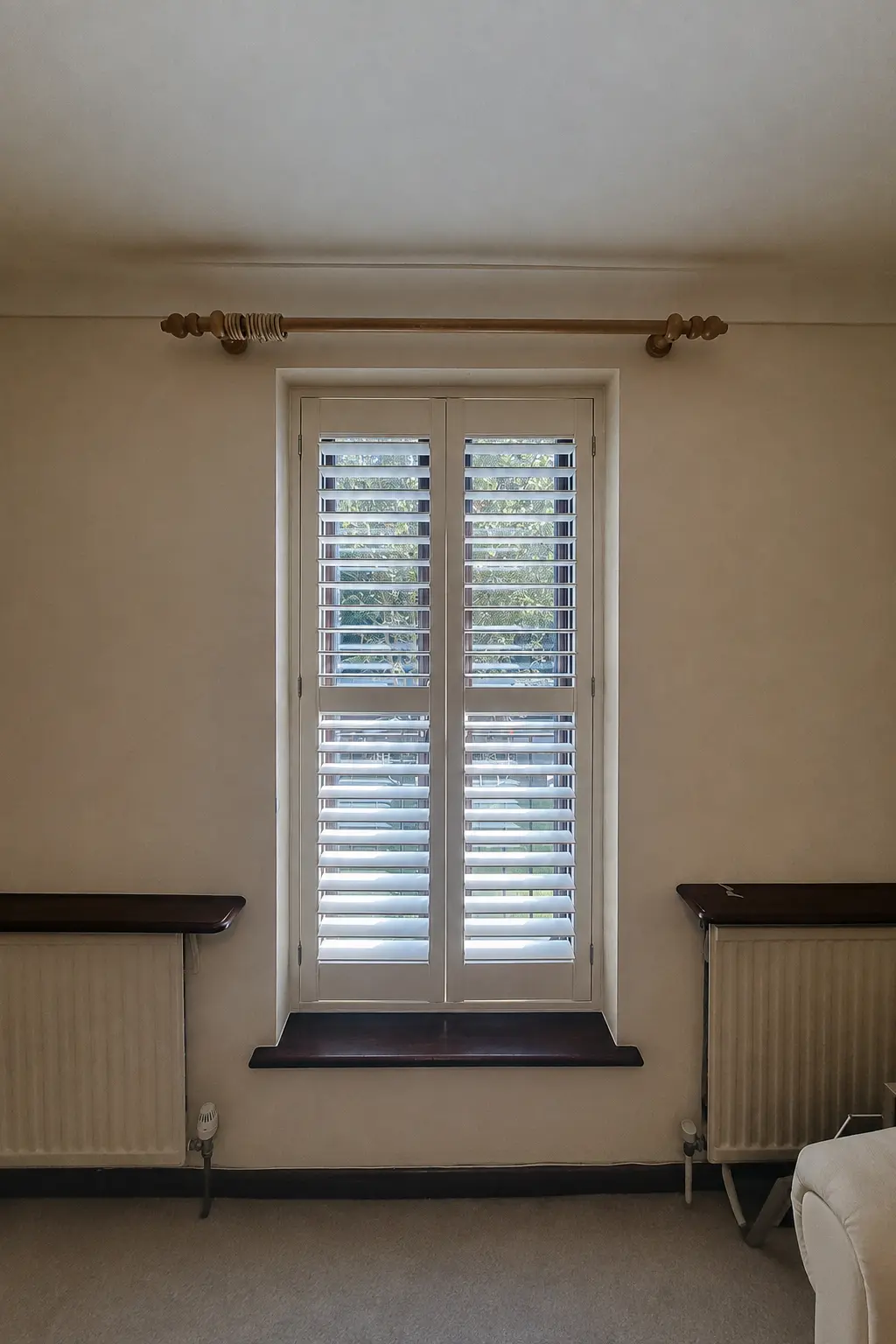
Loose, stiff and broken louvres can need different repairs. The pattern helps us decide what to check, but does not establish the cause or whether new parts are needed. You do not need to take anything apart: describe what has changed and send photographs of the whole shutter and the affected louvres.
Key takeaways
- Show whether one louvre or a whole group is affected; that pattern helps the assessment but does not confirm the cause.
- An undamaged louvre may need reattaching rather than replacing, once its supports and tilt connection have been checked.
- Some light between closed louvres is normal. A louvre that sits out of line or will not close needs checking, not forcing.
What is the difference between a loose, stiff and broken louvre?
Each louvre is held at both ends where it meets the upright side of the panel. Those supports and the linked tilt mechanism need checking if it drops back, flaps when the window is open or will not hold the angle you choose.
A stiff louvre resists turning, sticks partway or needs force. A louvre that turns on its own, out of step with the rest, may have come away from the bar or mechanism that links the louvres together. A broken louvre is damaged itself, with a crack along its length, a snapped end or a split where it meets the panel.
Some light between closed louvres is not a fault. The British Blind and Shutter Association notes that light will come through where louvres meet and at the edges of the panels, and that some louvres may close tighter than others. A louvre that sits visibly out of line, or will not close while the others do, needs checking rather than being forced into place.
What the louvre symptoms can tell us
| What you notice | What needs checking | Possible work after assessment |
|---|---|---|
| Every louvre in a panel droops or will not hold an angle | The louvre supports and shared tilt controls | Adjustment or repair of the affected parts, quoted after assessment |
| One louvre droops on its own | That louvre's supports and connection to the tilt system | Reattachment, adjustment or a compatible replacement part |
| One louvre turns out of step with the rest | Whether it has disconnected from the tilt rod or linking system | Reattaching it if the louvre and surrounding supports remain sound |
| Several louvres stop moving together | The tilt rod or linking system and the connected louvres | If needed, tilt-rod repair or replacement averages about £50 per rod |
| A louvre is cracked, split or snapped | The damaged louvre and the surrounding panel | If compatible, replacement averages about £25 per louvre |
| Louvres are stiff or hard to turn | Support, tilt connections, rubbing, paint or dirt, and possible moisture damage | Adjustment or repair where viable; replacement for confirmed water-damaged material |
| Louvres are swollen, warped or discoloured after getting wet | Possible water damage | Replacement if water damage is confirmed |
Prices are indicative averages including VAT, the stated parts and labour, with no separate call-out or travel charge. We confirm the cause and the price after seeing the shutter.
Why do louvres droop or stop moving together?
Louvres can droop when their supports or tilt controls wear or loosen, and a disconnected tilt rod or linking system can stop them moving together. The British Blind and Shutter Association also notes that timber absorbing and losing moisture over time may cause slight warping or twisting, which can change how a louvre sits and turns.
Notice whether one louvre or a whole group is affected. One loose louvre may need a local connection or support checked; several moving differently can involve the shared tilt system. We inspect both the affected parts and their surroundings before deciding whether adjustment, reattachment or replacement is suitable.
The association describes three ways of linking louvres: a visible tilt bar on the front of the panel, a hidden tilt system at the back, or a concealed mechanism inside the upright side of the panel. On a visible tilt rod, each louvre is attached by a small fixing. If one comes away, that louvre stops following the others; if the rod breaks or comes loose, several louvres stop together. Shutters with a split tilt rod or a midrail are made so the upper and lower louvres move independently, so separate sections are not always a fault.
Do not wedge, tape or glue a drooping louvre, and do not pull harder on a loose rod or force louvres back into line. Tape and glue can mark the finish, and force can break the fixings on louvres that still work. If the louvre itself is undamaged, reattaching it may be all that is needed.
Why are some louvres stiff or hard to turn?
A stiff louvre is usually held too firmly, rubbing against its neighbour or the frame, or caught by paint or dirt built up at its ends. Notice whether the stiffness started after decorating, after new windows were fitted or after a spell of condensation.
Moisture is a frequent reason in kitchens and bathrooms. The British Blind and Shutter Association advises that, apart from products designed for humid rooms, shutters should be kept dry, with condensation and water removed using a dry cloth to prevent damage.
Louvres that have swollen, warped or discoloured after getting wet need checking for water damage. If water damage is confirmed, the affected material needs replacement, not repair. Do not force a stiff louvre: forcing it can snap the louvre or its fixings, which turns an adjustment into a replacement. Our guide to safe shutter cleaning and fault checks explains routine care and when to stop and have a fault assessed.
Can a cracked or snapped louvre be replaced on its own?
Yes, when the surrounding panel is sound and a compatible louvre is available. The replacement has to match the existing louvre's width, length, shape and material, and suit the way the louvres in that panel are held and linked.
The indicative average is about £25 per replacement louvre, including VAT, the compatible part and labour, with no separate call-out or travel charge. This is a replacement-blade price, not a fixed price for every louvre fault. A new louvre can look slightly different beside an older finish, so we explain any likely difference before the work goes ahead rather than promise an identical result. Keep any pieces that have come away, because they show the original size and shape.
A louvre that broke because the side of the panel has split, or because the panel took a knock, needs the panel checked too: a new louvre cannot hold securely in damaged material. When many louvres are damaged or compatible parts cannot be found, replacing them one at a time may not give a lasting result. Older sets with several worn parts may suit restoration, our repair-or-replace guide explains how we compare the options, and Shutters Design supplies completely new made-to-measure shutters when a new set is the better route.
What does a louvre repair cost, and what should you send first?
Our indicative average prices include VAT, the stated parts and labour, with no separate call-out or travel charge: about £25 per replacement louvre, about £50 per tilt rod for repair or replacement, and about £25 per dropped panel for realignment. Adjustment and reattachment are quoted after we have seen the shutter; the replacement-louvre price does not apply to every loose or stiff louvre.
Several faults on one set are priced as one job, and we confirm the work and price before starting. We complete approximately 90% of repairs in one on-site visit; some jobs need a compatible part to be ordered or a return visit, and we say so before booking. Our plantation shutter repair cost guide explains how quotes are built.
You do not need to name the faulty part or open the shutter up. Send a photograph of the whole shutter and a close-up of the affected louvres, and mention the room. If the panel has dropped, rubs on the frame or will not close properly, we also check its hinges, alignment, frame support and nearby obstructions. Our plantation shutter repair guide explains those wider panel faults.
What to check and photograph
- Whether one louvre or a whole panel is affected.
- Whether the louvres droop, stick, turn out of step or are cracked.
- Whether the panel itself has dropped or rubs on the frame.
- A photograph of the whole shutter and a close-up of the affected louvres.
- Which room the shutter is in, especially a kitchen or bathroom.
- Any pieces that have come away, kept somewhere safe.
Common questions
Related shutter advice
- Plantation shutter repairs
- Common Plantation Shutter Problems and Repair Options
- Plantation Shutter Repair Costs: What Affects the Price?
Planning an assessment? Check our shutter repair and fitting areas for local service details before booking. Our pages for Teddington and Raynes Park explain what to send for a local louvre or tilt-control assessment.