
Blog
Plantation Shutter Repair Costs: What Affects the Price?
Our indicative averages are about £25 per replacement slat or louvre, £50 per tilt rod for repair or replacement, and £25 per dropped panel for realignment. These VAT-inclusive prices cover the stated parts and labour, not every fault or a whole shutter set. They are not fixed tariffs: different materials, access or additional repairs can change the quoted total.
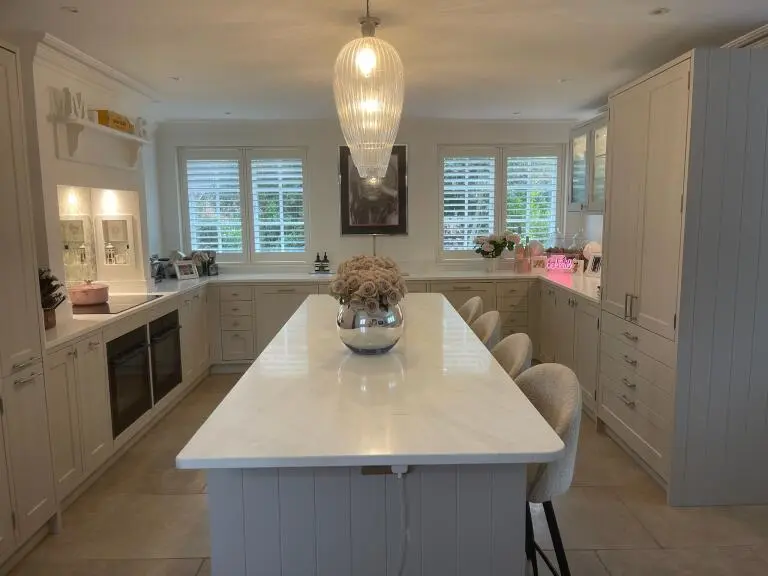
A replacement slat, a panel realignment and a bay refit involve different work, so shutter repair prices need to be read alongside their inclusions. Below are our indicative prices for interior plantation shutters and a real completed refit example. The final quote depends on the parts, access and work needed to leave the shutters moving properly.
Key takeaways
- Check the unit: one louvre, one panel, 20 hinges and a complete bay are different jobs.
- Our indicative prices have no separate call-out or travel charge.
- Compare the work included, especially removal, finish matching and rehanging, before comparing quote totals.
Typical shutter repair and refitting prices
| Typical scope | Published price | What the figure covers |
|---|---|---|
| Shutter slat or louvre replacement | About £25 per slat or louvre | The compatible replacement blade and labour. Its surrounding panel must still be sound. |
| Tilt-rod fix or replacement | About £50 per tilt rod | Fixing or replacing the rod, including labour. Other damaged connections may need additional work. |
| Dropped-panel realignment | About £25 per panel | Realignment and labour, not a new panel. Replacement components are quoted separately. |
| Supply and fit 20 magnets | About £150 total | Supply and fitting of 20 magnets. The required magnet type can change the quote. |
| Supply and fit 20 hinges | About £150 total | Supply and fitting of 20 hinges. The required hinge type can change the quote. |
| Replacement shutter panel | About 75% of the comparable regular new-shutter price | A panel matched to the required size and specification, with finish and fitting confirmed in the quote. |
| Smaller bay refit | About £250 | Refitting. Alignment, access and any finishing needed determine the final quote. |
| Smaller bay removal and refit | About £350 | Removal followed by refitting and alignment. |
| Larger bay fit | £300 | Fitting-only price for a larger bay set you supply, confirmed September 2026. Any additional work is agreed in the quote. |
| Larger bay removal and refit | About £450 | Removal followed by refitting and final alignment. |
Repair and refitting figures are indicative averages. The £300 larger-bay fitting-only price applies to shutters you supply. All include VAT and the stated parts, labour and fitting, with no separate call-out or travel charge. Different materials, component types, access or additional work can change the agreed quote.
How should you read the published shutter repair prices?
Check whether the figure is for one part, one panel, a batch of hardware or the whole bay. The price for 20 hinges is not a per-hinge rate, and a dropped-panel realignment does not include replacing the panel itself.
Slat and louvre mean the same adjustable horizontal blade. A replacement price includes the compatible part and labour, but the panel still needs to hold it securely. If the blade has detached because the surrounding material is damaged, replacing the blade alone will not solve the problem. Our guide to broken or loose shutter louvres explains how a loose connection differs from a damaged blade.
These figures concern interior plantation shutters. We do not service roller shutters, and the prices do not apply to exterior shutters, camera shutters or garage doors.
What affects the price and moves work beyond one component repair?
The part itself is one factor. Material, dimensions and connections must match the existing shutter. An unusual or discontinued component may need more sourcing or adaptation than a readily available one. If the original range or supplier is no longer available, our guide to repairs without the original supplier explains the options to check before buying parts. Several damaged parts also need checking together rather than priced as unrelated fixes.
Access and handling change the labour. A large panel, tracked system or awkward bay can need more time to remove, rehang and align than a small, easily reached panel. The quote should say which of these tasks is needed, not just describe the job as complicated.
Improving appearance is separate from fixing movement. A new part may not match an aged finish, and wider restoration can include several repairs, appearance work and removal or refitting. Our guide to restoration scope explains how to agree that wider job. Workshop work and any return visit should be stated in the quotation where needed.
Water-damaged material cannot be repaired. Replacing the affected part, panel or frame needs a separate price based on what can remain. A complete new made-to-measure set is a different job, supplied and fitted by Shutters Design.
What did a recent four-panel bay refit cost?
In August 2026, we refitted a four-panel bay measuring roughly 5 square metres for £250 total. The job took about 1.5 hours, including finishing work and cleaning.
This is one completed job, not a price per square metre or a guaranteed time for another bay. Two bays of the same area can need different hinge work, frame correction or access arrangements. Dividing this price by the area would hide those differences rather than give a reliable estimate.
Removal before building work and a later return are a different scope from this refit example. Our removal and refitting guide explains what to agree before replacement-window work and why reuse must be checked against the finished opening.
Are both quotes covering the same work?
| Item to compare | What both quotes should make clear |
|---|---|
| Shutters staying in place | Which panels and frames are retained, and which window the quote covers. |
| Repairs and replacement parts | What will be fixed, what will be replaced and whether further damaged parts are included. |
| Appearance | Whether only the new part is finished or neighbouring shutters and visible frames are included too. |
| Removal and return | Whether taking shutters down, work away from the house and later refitting are included. |
| Extra work and exclusions | Anything not included, and how additional work would be agreed before it starts. |
Compare the same work and intended result. These are scope questions, not additional prices or a promise that every item is included.
What should a fixed itemised quote include?
A useful quotation tells you both what will be put right and what will remain as it is. Compare the same shutters and expected result before choosing by price. Check removal, finish matching, workshop work, return visits and refitting where relevant.
For example, a quote for one replacement slat may leave the surrounding panels untouched. Another quote may include refreshing the finish across that window. The higher total can cover a different job, so ask about the difference before comparing totals. Any additional work discovered later needs explanation and approval before it goes ahead.
Our 12-month repair workmanship guarantee covers faults caused by our work, such as panels dropping or louvres loosening. It is not blanket cover for damage: cosmetic damage or broken louvres may be chargeable depending on the cause.
Common questions
Related shutter advice
- Plantation shutter repairs
- Common Plantation Shutter Problems and Repair Options
- Restoring Older Shutters in Period Homes
Planning an assessment? Check our shutter repair and fitting areas for local service details before booking.